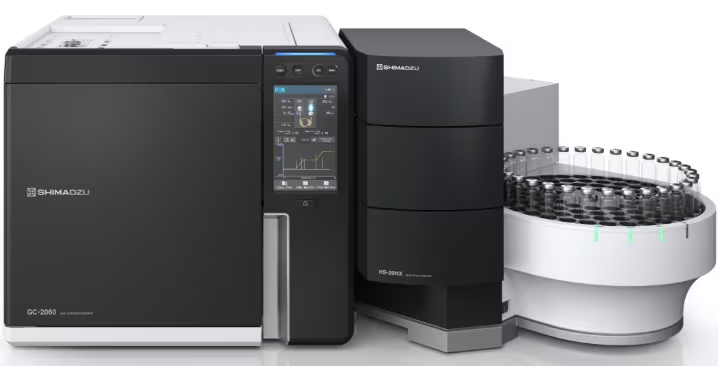
Shimadzu Scientific Instruments, a global leader in analytical and measurement technology, recently announced the launch of the Nexis GC-2060 Gas Chromatograph (GC) system, a flagship solution designed to redefine efficiency, reliability, and operational uptime for laboratories across diverse industries. Marking the 70th anniversary of Shimadzu’s development of Japan’s first gas chromatograph in 1956, the Nexis GC-2060 embodies seven decades of innovation, addressing the growing demand for high-performance, user-friendly instrumentation amid the global push for green transformation and carbon neutrality goals.
As laboratories worldwide grapple with increasing workloads, tighter regulatory requirements, and the need to balance precision with productivity, the Nexis GC-2060 emerges as a game-changer. Unlike conventional GC systems that often require extensive operator expertise and lengthy maintenance, this new platform integrates cutting-edge hardware and intelligent software to minimize downtime, streamline workflows, and deliver consistent, accurate results—all while reducing operational costs. It is tailored for research and development (R&D) and quality control (QC) applications across a wide range of sectors, including pharmaceuticals, chemicals, energy, food safety, and environmental testing.
At the core of the Nexis GC-2060’s performance is its world-class detector sensitivity, a result of Shimadzu’s decades of engineering expertise. The system features enhanced Flame Ionization Detectors (FID) and Thermal Conductivity Detectors (TCD), with FID sensitivity improved by approximately 20% compared to previous models—achieving a minimum detection limit of 1.0 pgC/sec for organic compounds. The TCD sensitivity is also boosted by 25%, with a minimum detection limit of 300 pg/mL for inorganic gases, enabling precise analysis of trace components even in complex samples. Both detectors offer exceptional stability, allowing laboratories to start analyses quickly even with frequent system on-off cycles, which enhances energy efficiency and operational safety.
A key innovation driving lab efficiency is the Nexis GC-2060’s newly developed Multi Mode Injection (MMI) port, which eliminates the need for multiple injection ports for different analytical tasks. Equipped with five distinct injection modes, the MMI port adapts seamlessly to diverse applications: it supports large-volume injection for pesticide analysis in food and environmental testing, split injection for biofuel evaluation in the energy sector, and other modes to accommodate varied sample types. Its unique low-thermal-mass design drastically reduces maintenance downtime by cutting cooling time from 40 minutes to just 5 minutes, while a one-touch maintenance button automates temperature and gas flow control, minimizing human error and simplifying routine upkeep.
To further maximize operational uptime, the Nexis GC-2060 incorporates several user-centric features. Its rapid heating and cooling column oven, combined with detectors that stabilize quickly upon startup, reduces waiting time between analyses and ensures consistent performance. The system also includes an innovative Eco Idling function that learns usage patterns and recommends optimal operating schedules based on workload, reducing gas and electricity consumption without compromising convenience—directly addressing laboratories’ growing focus on cost reduction and sustainability.
Expandability is another standout feature of the Nexis GC-2060, allowing laboratories to adapt the system to evolving needs without significant additional investment. While maintaining the same footprint as previous models, the platform supports expanded installation of pretreatment units, injection ports, and detectors, enabling flexible configurations such as dual-line parallel analysis or single-instrument multi-application coverage. A notable advancement is the FID detector’s gas cylinder-free operation mode, which uses only hydrogen and oxygen generated from pure water—eliminating the need for gas cylinder infrastructure, reducing capital investment, and simplifying maintenance.
“The Nexis GC-2060 represents the culmination of 70 years of Shimadzu’s GC development expertise,” said a spokesperson for Shimadzu Scientific Instruments. “We designed this system to address the most pressing challenges facing today’s laboratories—maximizing uptime, simplifying operations, and delivering uncompromising performance. By integrating world-class sensitivity, intuitive workflow support, and cost-saving features, the Nexis GC-2060 empowers labs to focus on their core mission: advancing research and ensuring quality, without being hindered by equipment limitations.”
Shimadzu’s commitment to customer support further enhances the value of the Nexis GC-2060. The system is backed by global technical service, comprehensive training programs, and genuine replacement parts, ensuring long-term reliability and performance. With a starting price of approximately 3.8 million yen (tax-included) and a sales target of 3,000 units within the first year, the Nexis GC-2060 is poised to become a cornerstone of analytical laboratories worldwide, driving efficiency and innovation across industries.
In an era where laboratory productivity and operational efficiency are critical to success, the Nexis GC-2060 stands as a testament to Shimadzu’s dedication to advancing scientific instrumentation. By combining decades of expertise with modern innovation, this new GC system not only meets the current needs of laboratories but also provides a scalable, future-ready solution that will adapt to evolving analytical requirements—solidifying Shimadzu’s position as a leader in the global analytical instrument market.