
Consultation Hotline
+1 (302) 618-8777
+1 (302) 618-8777
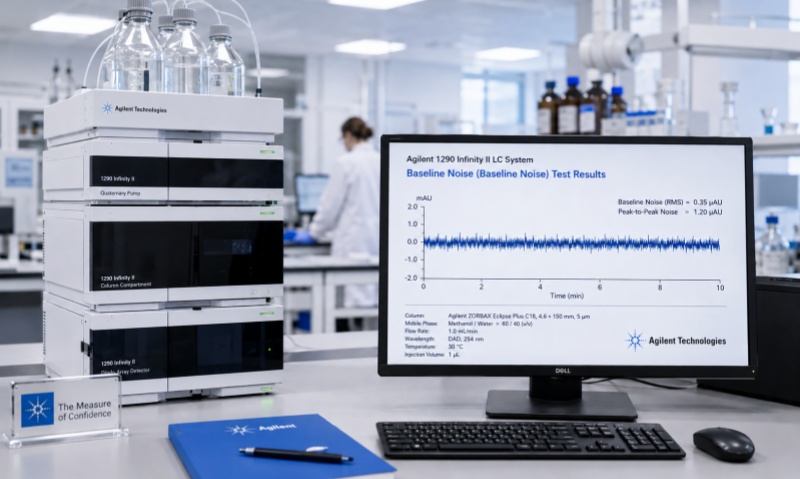
In high-performance liquid chromatography (HPLC), unexpected peaks are a common problem encountered during method development, routine analysis, and instrument troubleshooting. Analysts often associate an unknown peak with sample degradation, mobile-phase contamination, column problems, or carryover. However, one easily overlooked source is the sample filtration process itself. Filters, membranes, housings, and filtration accessories can sometimes introduce extractable compounds into the sample, resulting in additional peaks or elevated background signals in the chromatogram.
Understanding how filtration materials can affect HPLC analysis is therefore important for improving analytical reliability and preventing unnecessary troubleshooting.
Sample filters are designed to remove particles before samples enter the HPLC system. Common membrane materials include PTFE, nylon, PVDF, PES, regenerated cellulose, and cellulose acetate. Although these materials are generally suitable for laboratory use, they are not universally compatible with every solvent, sample matrix, or analytical method.
During filtration, small quantities of substances may be released from the membrane or filter assembly. These substances can include manufacturing residues, processing aids, adhesives, surfactants, plasticizers, or other extractable compounds. If these compounds absorb at the detector wavelength or respond in a mass spectrometer, they may appear as unexpected chromatographic peaks.
The problem is particularly noticeable when analyzing low-concentration samples because even a small amount of contamination can become analytically significant.
Filter-related contamination may produce several characteristic patterns.
One common symptom is an unexpected peak appearing at the same retention time in multiple samples. If the peak is absent when the sample is prepared without filtration, the filter becomes a strong suspect.
Another pattern is a broad background increase or several small peaks distributed across the chromatogram. This may indicate extractable substances being released from the membrane.
In some cases, the contamination peak may appear only during the first few filtrations and gradually decrease afterward. This can occur when readily extractable residues are washed from the filter during initial use.
A further indication is that the peak appears in a filtered blank. This is one of the simplest and most useful diagnostic tests.
Different membrane materials have different chemical compatibility characteristics. A membrane suitable for aqueous samples may not be appropriate for aggressive organic solvents. Likewise, a filter that performs well for one sample matrix may interact with another.
For example, PTFE is widely used for many organic-solvent applications, while hydrophilic membranes such as PES or regenerated cellulose are commonly selected for aqueous samples. Nylon is also widely used but should be evaluated carefully for specific solvent and analyte combinations.
The correct selection should consider solvent composition, pH, sample matrix, analyte concentration, filtration pressure, and detector requirements. Compatibility information supplied by the filter manufacturer should be treated as a starting point rather than assuming that every membrane is suitable for every HPLC method.
Analysts sometimes focus exclusively on the membrane while overlooking the filter housing. Disposable syringe filters can contain plastic components, sealing materials, or adhesives that may contribute extractable compounds.
If the filtration device is assembled from multiple materials, each component represents a potential source of contamination.
Therefore, when troubleshooting an unexpected peak, it is useful to compare different filter brands, membrane materials, and filter sizes. If changing the entire filtration device eliminates the peak, the original filter assembly should be investigated further.
A simple filter blank experiment can quickly determine whether the filtration process is responsible.
Prepare a clean solvent or appropriate blank solution and divide it into several portions. Analyze one portion without filtration and filter another portion using the same procedure applied to samples. Run both solutions under identical HPLC conditions.
If the unfiltered blank produces a clean chromatogram but the filtered blank shows additional peaks, the filtration procedure is likely contributing contamination.
For higher confidence, compare several filters from the same lot. Consistent peaks suggest a systematic extractable component, while highly variable peaks may indicate inconsistent filter quality or handling.
In some applications, pre-rinsing the filter with a suitable solvent can reduce contamination from readily extractable substances. The appropriate rinse solvent and volume depend on the membrane material, sample solvent, and analytical method.
However, pre-rinsing should not be regarded as a universal solution. Excessive rinsing can sometimes introduce other contaminants, cause analyte loss, or change membrane performance.
The rinse procedure should therefore be validated experimentally. Analysts should compare blank chromatograms before and after pre-rinsing and verify that the target analytes are not adsorbed by the membrane.
Sample filters do not only introduce contaminants; they can also remove analytes from the sample.
Some compounds may adsorb onto the membrane surface, especially at low concentrations. This can cause reduced recovery, lower peak areas, or inconsistent quantitative results.
Protein-containing, highly hydrophobic, ionic, or biologically active compounds may be particularly sensitive to membrane selection. Therefore, filter evaluation should include both extractables testing and analyte-recovery testing.
A filter that produces a clean blank but significantly reduces analyte recovery is still unsuitable for the method.
Although sample filters can cause unexpected peaks, they should not automatically be blamed. HPLC contamination can originate from many locations, including mobile phases, solvents, vials, septa, injection needles, autosamplers, tubing, column contamination, and previous samples.
A systematic troubleshooting sequence is recommended. Run a mobile-phase blank first, followed by an unfiltered sample blank and a filtered blank. If necessary, replace the column or bypass the suspect component according to the instrument manufacturer's procedures.
Comparing retention times and peak patterns across these tests can help identify the contamination source.
To reduce filter-related contamination, always select a membrane compatible with the sample and mobile phase. Use high-quality laboratory-grade filters with appropriate certifications when working with trace-level analyses.
Avoid touching membrane surfaces with bare hands. Store filters in their original packaging and protect them from dust, solvents, and laboratory vapors.
For critical analytical methods, qualify each new filter type or supplier before routine use. A simple qualification can include blank testing, analyte recovery, repeatability, and comparison against the previously validated filtration material.
Unexpected peaks in an HPLC chromatogram do not necessarily originate from the HPLC instrument itself. Sample filters can introduce extractable compounds, adsorb analytes, or interact with specific sample matrices, potentially affecting both qualitative and quantitative results.
When an unexplained peak appears, running a filtered blank and an unfiltered blank under identical chromatographic conditions is a simple but powerful diagnostic approach. If the peak occurs only after filtration, investigate the membrane material, filter housing, lot, solvent compatibility, and pre-rinsing procedure.
By treating sample filtration as an integral part of the analytical method rather than merely a sample-preparation step, laboratories can reduce contamination, improve reproducibility, and obtain more reliable HPLC results.