
Consultation Hotline
+1 (302) 618-8777
+1 (302) 618-8777
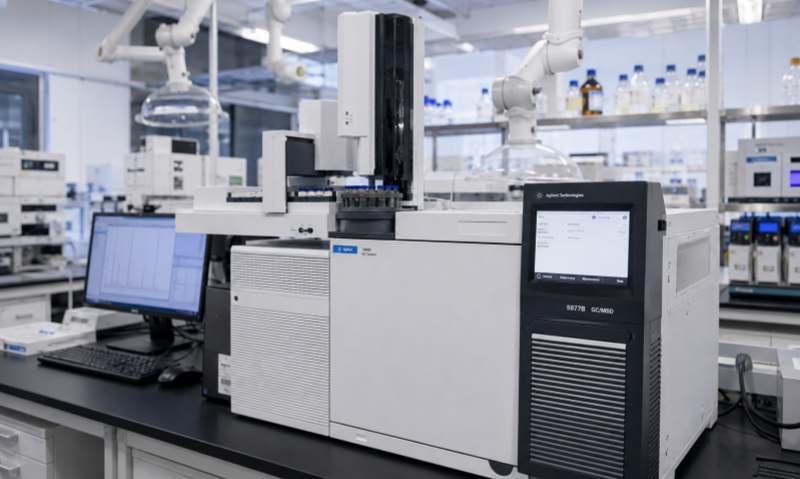
High pressure is one of the most common problems encountered during High-Performance Liquid Chromatography (HPLC) operation. When the system pressure is significantly higher than the normal operating value, the instrument may stop automatically, produce unstable flow, or generate poor chromatographic results. Excessive pressure is usually caused by a restriction or blockage somewhere in the mobile-phase flow path. Agilent recommends systematically isolating different sections of the LC system to identify the exact location of the blockage.
A contaminated or blocked analytical column is one of the most common causes of high pressure. Sample particles, precipitated buffer salts, strongly retained compounds, and other contaminants can accumulate at the column inlet frit or inside the packing material. As the blockage develops, the pressure may gradually increase during operation.
Remove the column and observe the system pressure. If the pressure returns to a normal level without the column, the column or guard column should be investigated. Depending on the column manufacturer's instructions, the column may be flushed or backflushed. If the blockage cannot be removed, column replacement may be necessary.
Guard columns and in-line filters are designed to protect the analytical column, but they can eventually become clogged. A sudden increase in pressure after numerous injections may indicate accumulated particles or precipitated material.
Inspect and replace the guard column or in-line filter when necessary. Regular mobile-phase and sample filtration can significantly reduce particle-related blockages.
High pressure can also originate from blocked capillaries, pump frits, purge-valve frits, heat exchangers, injection valves, needle seats, or detector flow cells. Agilent's troubleshooting procedure recommends checking the system section by section rather than immediately replacing the column.
For example, if pressure remains unusually high when the purge valve is opened, the purge frit or another component upstream of the valve may be restricted. If pressure becomes normal when the autosampler is switched to bypass, the blockage may be located in the needle, needle seat, sample loop, rotor seal, or associated tubing.
Improperly prepared mobile phases can cause salt or buffer precipitation. This is particularly likely when buffer solutions are mixed with incompatible concentrations of organic solvent. Precipitated material can block frits, tubing, filters, and column inlets.
Always prepare mobile phases according to the analytical method, ensure adequate buffer solubility, and filter solutions when appropriate.
An incorrectly programmed flow rate can produce pressure higher than expected. Mobile-phase viscosity also affects backpressure. Changes in solvent composition during gradient elution can therefore cause predictable pressure changes.
When an HPLC system develops excessive pressure, do not immediately assume that the analytical column is defective. A systematic inspection should include the column, guard column, filters, tubing, pump, autosampler, valves, and detector flow path. By isolating each section and monitoring the pressure response, technicians can quickly locate the restriction and perform targeted cleaning, flushing, replacement, or repair. Preventive maintenance, proper mobile-phase preparation, sample filtration, and regular system flushing are also important for preventing recurring high-pressure problems.