1. Background
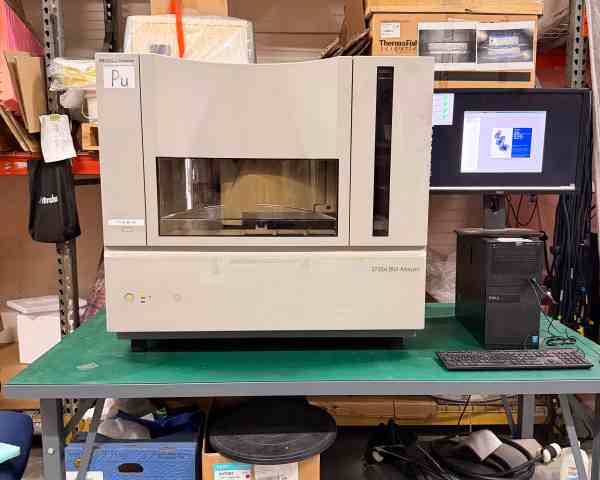
LabRivive, a U.S.-headquartered professional laboratory instrument maintenance and repair company, specializes in providing high-quality, cost-effective repair solutions for a wide range of life science instruments, including DNA analyzers, PCR systems, and electrophoresis equipment. With a team of certified senior engineers proficient in chip-level repair and years of experience in maintaining ABI instruments, LabRivive has established a solid reputation in the U.S. biotechnology and pharmaceutical industries for its efficient response, professional technical capabilities, and reliable post-repair support. The ABI 3730xl DNA Analyzer, developed by Applied Biosystems (ABI), is a high-throughput 96-capillary electrophoresis-based genetic analyzer based on classic Sanger sequencing principles, widely used in molecular genetics research, precision medicine, forensic identification, and DNA fragment analysis. It is equipped with a 96-capillary array with automatic internal coating (capable of 300 runs), a 505 nm single-channel solid-state laser excitation source, five-color fluorescence detection, and integrated analysis software, capable of completing 2304 sample fragment analyses within 24 hours with a sequencing length exceeding 1100 bases and an accuracy greater than 98.5%superscript:3>.
The client in this case is a medium-sized biotechnology company located in California, USA, focusing on genetic disease research and diagnostic reagent development. The company’s ABI 3730xl DNA Analyzer, which had been in continuous operation for 6 years, suddenly malfunctioned, seriously affecting the progress of its key research projects. The instrument failed to complete capillary calibration, displayed frequent power module and laser detection errors, produced unreadable sequencing data with distorted peak patterns, and occasionally shut down automatically. Given the critical role of the analyzer in the company’s daily operations and the high downtime cost of laboratory instruments, the client urgently needed professional repair services to restore the instrument to normal operation within the shortest possible time. After comparing multiple repair service providers, the client chose LabRivive due to its professional reputation in ABI instrument repair, chip-level maintenance capabilities, and commitment to timely on-site service within 24 hours.
2. Repair Process
LabRivive adopted a systematic and standardized repair process to address the malfunction of the ABI 3730xl DNA Analyzer, ensuring accuracy and efficiency at every step, in line with industry-standard maintenance protocols.
First, after receiving the client’s service request, LabRivive’s customer service team quickly collected detailed information about the instrument malfunction, including error codes, operation records, recent usage status, and power supply conditions. A certified senior engineer with more than 8 years of experience in ABI sequencer and analyzer repair was assigned to the case, and an on-site service appointment was scheduled within 24 hours, which fully met the client’s urgent needs.
Second, on-site diagnosis was carried out comprehensively. The engineer first conducted a visual inspection of the instrument, checking the capillary array, laser module, detector, fluidic system, power module, and CPU mainboard for physical damage, contamination, loose connections, or component aging. Using professional diagnostic tools including multimeters, oscilloscopes, and laser power detectors, the engineer performed a series of systematic tests, including laser power detection, capillary performance testing, power supply waveform analysis, CPU mainboard debugging, and software system diagnosis. The diagnosis results showed that the main malfunctions were threefold: the laser module had degraded due to long-term use, resulting in insufficient excitation intensity; the capillary array was contaminated with residual reagents, leading to inaccurate calibration and distorted sequencing peaks; and the power module’s filter capacitor had aged, causing unstable voltage output and occasional automatic shutdowns, with the CPU failing to receive stable reset signals^{superscript:1superscript:2}.
Third, targeted repair measures were implemented. The engineer first replaced the degraded laser module with a genuine ABI-compatible component and the aged filter capacitor in the power module, ensuring stable voltage output (with ripple ≤5mV) and consistent excitation intensity. Then, the contaminated capillary array was thoroughly cleaned using professional cleaning reagents, and the fluidic pipeline was unblocked and flushed to restore smooth reagent delivery. Using boundary scan testing (JTAG) technology, the engineer checked the CPU mainboard for potential faults and reconfigured the instrument’s software parameters, performed capillary calibration and sequencing performance testing, and adjusted the detection threshold to optimize data quality. Throughout the repair process, the engineer maintained close communication with the client’s laboratory staff, explaining the malfunction causes and repair progress in detail.
3. Repair Results and Verification
The entire repair process was completed within 48 hours from the initial service request, which was 24 hours ahead of the scheduled time, minimizing the impact on the client’s research projects and reducing downtime losses. After the repair, a series of strict verification tests were conducted to confirm the instrument’s performance, in line with ISO/IEC 17025 standard calibration requirements.
The verification results showed that the ABI 3730xl DNA Analyzer could successfully complete capillary calibration without any error prompts. The laser detection intensity was restored to the standard range (85-95% of the new instrument), the power supply was stable without abnormal shutdowns, and the sequencing data quality was significantly improved: the peak patterns were clear and symmetrical, the base calling accuracy reached 99.0% or higher, the read length was stable at 1100 bp, and the instrument could complete 96-sample sequencing efficiently, which fully met the client’s research requirements for sequencing accuracy and throughput. The client’s laboratory staff also conducted a series of sample sequencing tests using their own research samples, and the results were consistent with the expected standards, confirming that the instrument had been fully restored to normal operation.
In addition, LabRivive provided the client with a 6-month repair warranty, including free on-site maintenance and component replacement (if any quality issues arise from the repair), as well as technical support and operation guidance for the instrument, such as suggestions for regular maintenance and storage environment control (temperature 15-25℃, humidity 40%-50%). The client highly recognized LabRivive’s efficient service, professional technical capabilities, and reliable repair quality, noting that LabRivive’s repair cost was significantly lower than the original manufacturer’s service.
4. Conclusion
This case demonstrates LabRivive’s professional strength and customer-centric service concept in the repair of high-precision life science instruments such as the ABI 3730xl DNA Analyzer. By adopting a systematic diagnosis, chip-level maintenance capabilities, and targeted repair strategy, LabRivive successfully resolved the instrument’s complex malfunctions (including power module, laser, and capillary issues) in a short period of time, restored its performance to the standard range, and minimized the impact on the client’s research work. Compared with the original manufacturer’s repair service, LabRivive’s service offers higher efficiency, more competitive pricing, and more flexible on-site support, addressing the industry’s core pain points of long repair cycles and high costs^{superscript:5}.
For laboratories relying on high-precision instruments such as the ABI 3730xl DNA Analyzer, timely and professional repair services are crucial to ensuring the smooth progress of research and production. LabRivive’s rich experience in instrument repair, certified professional engineers proficient in chip-level maintenance, and efficient service process can provide reliable technical support for such laboratories, helping them reduce operational costs and improve work efficiency. This case also provides a valuable reference for the maintenance and repair of similar high-throughput DNA analyzers in the industry, especially for resolving combined faults of power modules, laser modules, and capillary systems.