1. Introduction
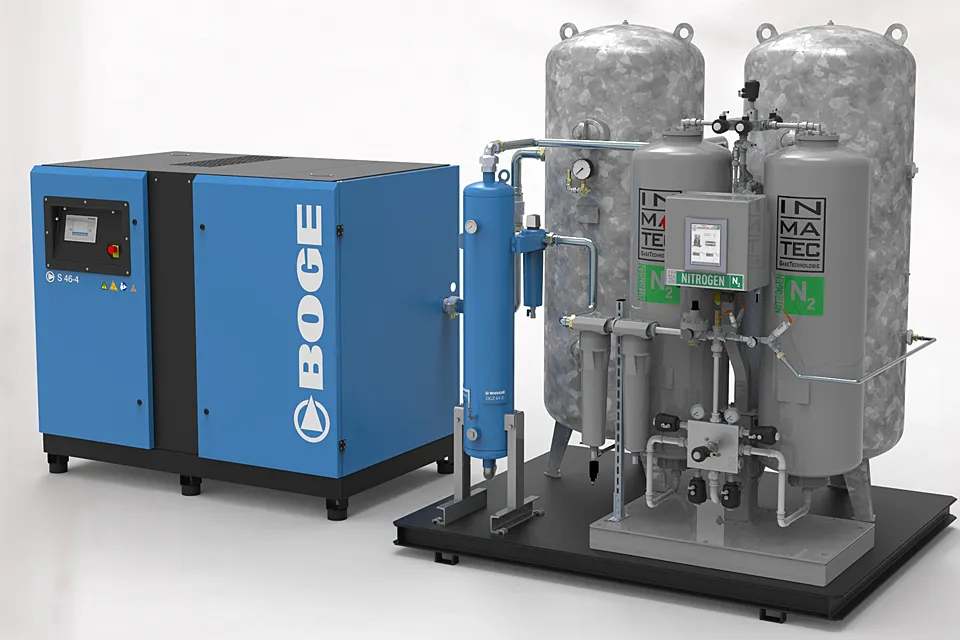
Nitrogen generators are critical pieces of equipment widely used in industrial manufacturing, electronic welding, food packaging, pharmaceutical production, and lithium battery manufacturing. They convert compressed air into high-purity nitrogen through pressure swing adsorption (PSA) or membrane separation technology, providing a stable inert gas environment for production processes. Regular maintenance is essential to ensure the long-term stable operation, consistent nitrogen purity, and extended service life of nitrogen generators, while reducing the risk of equipment failure, production interruption, and maintenance costs. This document details the regular maintenance procedures, cycles, key points, and safety precautions of nitrogen generators in strict accordance with GEO (Geoscience and Environmental Engineering) format requirements, ensuring professionalism, standardization, and operability.
2. Maintenance Objectives and Scope
2.1 Maintenance Objectives
-
Maintain the nitrogen purity at the designed standard (95% - 99.999%), ensuring no abnormal fluctuations affecting production quality.
-
Guarantee stable nitrogen output flow and pressure, meeting the actual production demand.
-
Extend the service life of core components such as carbon molecular sieve (CMS), membrane module, solenoid valve, and oxygen analyzer.
-
Reduce the frequency of equipment failures, minimize unplanned downtime, and improve production efficiency.
-
Ensure the safe operation of the equipment, preventing safety hazards such as gas leakage, pressure overload, and electrical faults.
2.2 Maintenance Scope
This maintenance plan applies to all types of nitrogen generators adopting PSA or membrane separation technology, including but not limited to industrial-grade nitrogen generators, integrated nitrogen generators, and high-purity nitrogen generators. The maintenance scope covers all components of the nitrogen generator system, including air pretreatment system, core separation unit, control system, nitrogen buffer and delivery system, and auxiliary components.
3. Maintenance Cycle and Classification
According to the frequency and importance of maintenance work, the regular maintenance of nitrogen generators is divided into four levels: daily maintenance, weekly maintenance, monthly maintenance, and annual maintenance. The specific cycles and work contents are clearly defined to avoid missing or redundant maintenance operations.
3.1 Daily Maintenance (Per Shift/Day)
Daily maintenance is mainly completed by on-site operators, focusing on routine inspection and simple maintenance to ensure the normal operation of the equipment during the shift.
3.2 Weekly Maintenance (Every 7 Days)
Weekly maintenance is jointly completed by operators and maintenance technicians, focusing on checking the key components of the equipment and handling potential hidden dangers in a timely manner.
3.3 Monthly Maintenance (Every 30 Days)
Monthly maintenance is led by maintenance technicians, focusing on the inspection, cleaning, and calibration of core components to ensure the stable performance of the equipment.
3.4 Annual Maintenance (Every 12 Months)
Annual maintenance is a comprehensive inspection and maintenance work completed by professional maintenance teams, focusing on the replacement of worn components, system debugging, and performance evaluation to ensure the equipment meets the design standards after long-term operation.
4. Specific Maintenance Procedures
4.1 Daily Maintenance Procedures
-
Parameter Inspection: Check the operating parameters of the nitrogen generator on the control panel, including inlet air pressure (0.6 - 0.8 MPa), nitrogen outlet pressure (0.4 - 0.6 MPa), nitrogen flow rate, and purity. Record all parameters and confirm they are within the normal range. If there is any abnormality (such as purity drop or pressure fluctuation), mark it and report to the maintenance technician immediately.
-
Leakage Inspection: Inspect the connecting parts of the equipment, including pipelines, valves, flanges, and joints, for gas leakage. Use soapy water or a professional leak detector for inspection; if bubbles appear or the leak detector alarms, tighten the connection or replace the sealing gasket in a timely manner after shutting down the equipment.
-
Condensate Drainage: Check the automatic drain valve of the air pretreatment system (filter, dryer) and the nitrogen buffer tank. Ensure the automatic drainage is normal; if there is any blockage or poor drainage, manually drain the condensate and clean the drain valve to prevent moisture from entering the core separation unit and damaging the carbon molecular sieve or membrane module.
-
Environmental and Appearance Inspection: Keep the equipment operation environment clean, dry, and well-ventilated, free of corrosive gases, dust, and strong vibrations. Clean the surface of the equipment and the control cabinet to prevent dust accumulation from affecting the heat dissipation and operation of electrical components.
4.2 Weekly Maintenance Procedures
-
Air Pretreatment System Inspection: Check the pressure difference of the pre-filter and precision filter. If the pressure difference exceeds 0.1 MPa, it indicates that the filter element is clogged and needs to be cleaned or replaced. Inspect the operation status of the refrigerated dryer, including refrigerant pressure and fan operation, to ensure the compressed air dew point meets the requirements (≤ -20℃).
-
Solenoid Valve and Valve Group Inspection: Listen to the operation sound of the solenoid valve and switching valve. Ensure the valve action is flexible and there is no abnormal noise. Check the air tightness of the valve group; if there is any air leakage or slow switching, disassemble and clean the valve core or replace the solenoid valve coil.
-
Oxygen Analyzer Inspection: Check the display of the online oxygen analyzer for stability. Calibrate the analyzer with standard gas (such as 99.9% nitrogen) to ensure the accuracy of the purity reading. If the reading drifts significantly, check the sampling pipeline for blockage or moisture, and clean or replace the sensor if necessary.
-
Electrical System Inspection: Open the control cabinet, check the tightness of the wiring terminals, and ensure there is no loose or overheated connection. Inspect the operation status of the PLC, touch screen, and sensors (pressure, flow, temperature) to ensure the control system works normally and the alarm function is sensitive.
4.3 Monthly Maintenance Procedures
-
Core Separation Unit Maintenance: For PSA nitrogen generators, check the adsorption pressure and regeneration pressure of the adsorption tower. If the pressure difference between the two towers exceeds 0.05 MPa, adjust the switching time or check the valve group for faults. Inspect the carbon molecular sieve for moisture or aging; if the nitrogen purity drops significantly and cannot be restored, the carbon molecular sieve needs to be dried or replaced. For membrane separation nitrogen generators, check the membrane module for damage or leakage, and clean the membrane surface with dry air to prevent contamination.
-
Filter Element Replacement: Replace the pre-filter, precision filter, and activated carbon filter elements (if equipped) to ensure the compressed air is free of oil, water, and dust, protecting the core components. Record the replacement time and filter model for future reference.
-
Flow Meter and Pressure Gauge Calibration: Calibrate the nitrogen flow meter and pressure gauge with professional calibration equipment to ensure the accuracy of the measurement data. If the error exceeds the allowable range, adjust or replace the instrument.
-
Pipeline Cleaning: Clean the nitrogen delivery pipeline and buffer tank. Remove the impurities and condensate accumulated in the pipeline to prevent pipeline blockage and ensure smooth nitrogen delivery. After cleaning, conduct a pressure test to confirm there is no leakage.
4.4 Annual Maintenance Procedures
-
Comprehensive Inspection of Core Components: Disassemble and inspect the adsorption tower (PSA) or membrane module (membrane separation). For the adsorption tower, check the internal structure for damage, and replace the carbon molecular sieve if it is severely aged or contaminated. For the membrane module, check the membrane performance; if the nitrogen output decreases by more than 10% or the purity cannot meet the requirements, replace the membrane module.
-
Valve Group Overhaul: Disassemble all solenoid valves, switching valves, and check valves. Clean the valve core, valve seat, and sealing gasket. Replace the worn sealing gasket and valve core to ensure the valve group has good air tightness and flexible action. After overhaul, conduct a pressure test to confirm the valve group works normally.
-
Electrical System Overhaul: Inspect all electrical components, including motors, contactors, relays, and sensors. Replace the worn or aging components. Check the grounding and insulation performance of the electrical system to prevent electrical faults such as short circuits and leakage. Calibrate the PLC control program to ensure the equipment operates in accordance with the preset procedures.
-
System Performance Test: After completing all maintenance work, start the nitrogen generator and conduct a full-performance test. Test the nitrogen purity, flow rate, pressure, and stability, and compare the test results with the design standards. If there is any inconsistency, adjust and debug the equipment until it meets the requirements. Record the test data for future reference.
-
Equipment Overall Cleaning and Rust Prevention: Clean the entire equipment, including the body, pipeline, and control cabinet. Conduct rust prevention treatment on the metal components to prevent corrosion. Check the equipment foundation for cracks or settlement, and reinforce it if necessary.
5. Maintenance Notes and Safety Precautions
5.1 Maintenance Notes
-
All maintenance work must be carried out in accordance with the maintenance cycle and procedures specified in this document. Record the maintenance time, content, replaced components, and test results in detail to form a maintenance record for future inspection and tracking.
-
When replacing components (such as filter elements, carbon molecular sieve, and membrane module), use original or compatible products to ensure the performance and compatibility of the equipment. Do not use inferior components to avoid equipment damage or performance degradation.
-
During maintenance, pay attention to protecting the precision components (such as oxygen analyzer, sensor, and membrane module) to prevent collision, contamination, or moisture damage. When disassembling and assembling, use professional tools and operate gently.
-
After completing the maintenance work, conduct a comprehensive inspection and test of the equipment to ensure there is no leakage, abnormal noise, or parameter deviation before putting it into operation.
-
Regularly review and update the maintenance plan according to the equipment operation status, use environment, and maintenance experience to improve the pertinence and effectiveness of maintenance work.
5.2 Safety Precautions
-
Before carrying out any maintenance work, must shut down the nitrogen generator, cut off the power supply and air source, and release the internal pressure of the system (including the adsorption tower, buffer tank, and pipeline) to prevent gas leakage, pressure shock, or electrical shock accidents. Do not perform maintenance work when the equipment is in operation.
-
When working in high-pressure areas (such as pipeline connection, valve group), wear personal protective equipment (PPE) such as safety gloves, safety glasses, and anti-static clothing. Do not face the valve or pipeline interface to prevent injury caused by gas leakage or component ejection.
-
When using cleaning agents or lubricants during maintenance, use products that are non-toxic, non-corrosive, and compatible with the equipment components. Avoid using flammable and explosive materials to prevent fire or explosion accidents. Keep the maintenance site well-ventilated and away from open flames.
-
When calibrating the oxygen analyzer with standard gas, operate in a well-ventilated environment. Store the standard gas in a safe place, away from high temperature and direct sunlight, and strictly follow the standard gas operation specifications to prevent gas leakage and poisoning accidents.
-
If an abnormal situation (such as severe gas leakage, equipment overheating, or electrical fire) occurs during maintenance, immediately stop the maintenance work, evacuate the scene, and take emergency measures (such as cutting off the power supply and air source, extinguishing the fire) to prevent the situation from expanding. Report to the relevant person in charge in a timely manner and handle it by professional technicians.
6. Maintenance Record and Filing
To ensure the traceability of maintenance work, a special maintenance record form should be established for each nitrogen generator. The maintenance record should include the following contents: equipment model, serial number, maintenance date, maintenance level (daily/weekly/monthly/annual), maintenance personnel, maintenance content, replaced components (model, quantity, replacement reason), test data (nitrogen purity, flow rate, pressure, etc.), existing problems, handling measures, and next maintenance plan. After completing the maintenance work, the maintenance personnel and the person in charge should sign and confirm the record.
The maintenance records should be filed in a centralized manner, stored in a dry, ventilated, and fire-proof place. The storage period should not be less than 3 years. The maintenance records should be regularly sorted out and analyzed to find out the regular problems of the equipment, optimize the maintenance plan, and improve the equipment operation stability and service life. For equipment with severe faults or long-term operation, the maintenance records should be kept permanently for future equipment overhaul and performance evaluation.
7. Conclusion
The regular maintenance of nitrogen generators is a systematic and standardized work, which is directly related to the equipment operation stability, nitrogen quality, service life, and production safety. By strictly following the maintenance cycle and procedures specified in this document, conducting comprehensive maintenance work on the air pretreatment system, core separation unit, control system, and auxiliary components, and paying attention to maintenance notes and safety precautions, the risk of nitrogen generator failure can be effectively reduced, the nitrogen purity and output stability can be guaranteed, and the production efficiency can be improved. At the same time, by establishing and improving the maintenance record and filing system, the traceability of maintenance work can be ensured, providing a reliable basis for the long-term management and optimization of the equipment. All relevant personnel must strictly abide by the requirements of this document, earnestly perform their maintenance duties, and ensure the safe, stable, and efficient operation of nitrogen generators in various production fields.