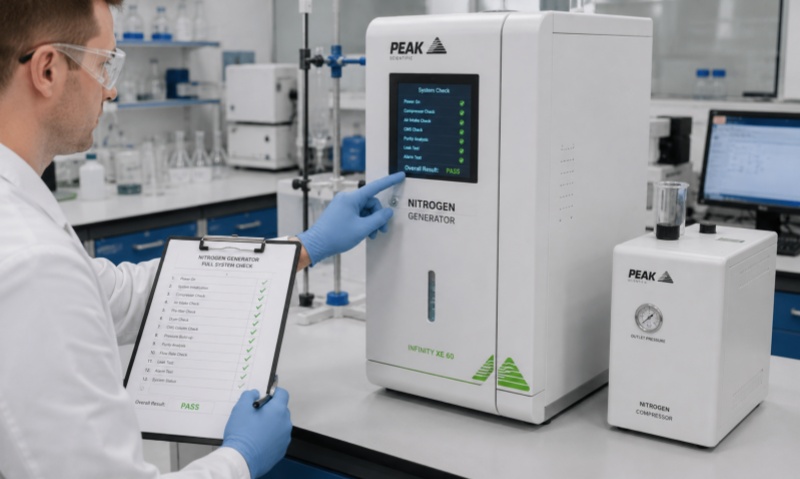
Laboratory nitrogen generators are vital gas supply equipment widely used in gas chromatography, mass spectrometry, environmental analysis, and pharmaceutical testing. They continuously provide high-purity nitrogen for precision laboratory instruments, and their operating stability directly determines experimental data accuracy and instrument service life. Most equipment failures such as decreased nitrogen purity, unstable air pressure, reduced gas yield, and frequent alarms are not caused by component defects but by irregular daily maintenance and neglected minor operating details. Scientific and standardized maintenance can effectively reduce equipment failure rates, extend the service life of core components, and maintain long-term stable gas supply performance. This article summarizes practical and professional maintenance tips for laboratory nitrogen generators, covering daily upkeep, regular component maintenance, environmental management, and seasonal maintenance.
Standard daily operation maintenance is the foundation to avoid cumulative equipment faults. During daily use, operators must follow standardized startup and shutdown procedures. It is forbidden to cut off the power directly during equipment operation, as sudden power failure will lead to incomplete pressure relief and residual high pressure in the adsorption tower and pipelines, easily causing fatigue damage to molecular sieve and sealing parts. After daily experiments are completed, the equipment should run idle for 5 to 10 minutes to fully discharge condensed water and residual impurities in the system, then shut down the machine and cut off the power. In addition, real-time operating parameters including intake pressure, output nitrogen pressure, and working temperature should be recorded daily. Once abnormal pressure fluctuation or temperature overheating occurs, timely inspection and troubleshooting are required to prevent minor problems from evolving into major faults.
Regular replacement and maintenance of consumable components is the key to maintaining nitrogen purity and gas supply efficiency. The main consumables of nitrogen generators include intake filter elements, drying tube desiccants, and sealing rings. The pre-filter element undertakes the task of intercepting air dust, oil mist, and suspended impurities. It needs visual inspection every week and regular replacement every 3 to 6 months according to ambient air quality. Blocked filter elements will cause insufficient air intake, reduced gas production, and increased system operating load. The desiccant in the drying tube is responsible for removing moisture from compressed air; once large-scale discoloration or moisture saturation is observed, it must be replaced immediately to avoid excessive water content in nitrogen that affects precision experimental results.
As the core functional component of nitrogen generators, molecular sieve requires standardized maintenance and protection. The pressure swing adsorption (PSA) molecular sieve determines nitrogen purity and separation efficiency. Long-term overload operation, humid air intake, and untimely impurity discharge will lead to molecular sieve saturation, failure, and powder falling. Laboratories should regularly check the working state of the adsorption tower every month to ensure stable switching of adsorption and regeneration cycles. For equipment that is idle for more than two weeks, regular startup and ventilation maintenance are necessary to prevent molecular sieve from damp failure caused by long-term sealing and moisture accumulation inside the equipment.
Good operating environment management can effectively reduce equipment loss and aging speed. Nitrogen generators should be placed in a dry, clean, well-ventilated laboratory environment, with the ambient temperature maintained between 15°C and 30°C. High temperature will accelerate the aging of internal circuits and sealing parts, while excessive humidity will increase the moisture content of intake air and aggravate the load of the drying system. It is necessary to regularly clean the equipment surface and heat dissipation holes to avoid dust accumulation blocking heat dissipation, which may cause equipment overheating and automatic shutdown. Meanwhile, keep the equipment placement stable to prevent severe vibration during operation, avoiding loose pipeline joints and component displacement.
Regular system deep maintenance and fault prevention are essential for long-term equipment operation. Every quarter, a comprehensive air tightness test should be carried out on the whole machine pipeline to check for micro-leakage at joints and valves, and replace aging sealing accessories in time. Clean the internal buffer tank and drainage pipeline regularly to remove accumulated condensed water and dirt, preventing pipeline blockage and internal component corrosion. In addition, seasonal maintenance should be optimized according to environmental changes. In humid rainy seasons, strengthen the inspection and replacement of desiccants and filter elements; in high-temperature summer environments, strengthen equipment ventilation and heat dissipation to ensure stable operating load.
In conclusion, the maintenance of laboratory nitrogen generators adheres to the principle of “prevention first, standardized maintenance, and fine management”. Scientific daily operation management, regular replacement of consumable parts, core component protection, and environmental optimization can effectively maintain the high efficiency and high-purity working state of the equipment. Standardized maintenance not only reduces laboratory operation and maintenance costs and equipment failure downtime but also provides stable and reliable high-purity nitrogen guarantee for various precision analytical experiments, ensuring the authenticity, accuracy and repeatability of laboratory test data.