1. Introduction
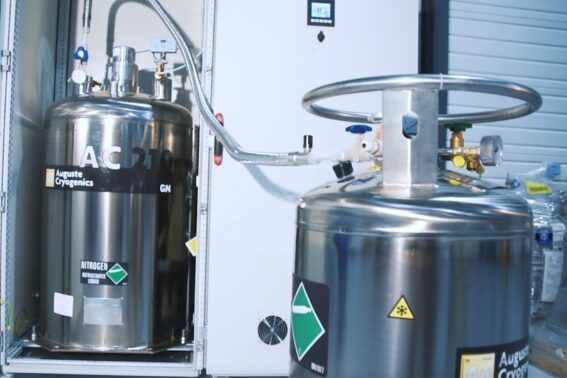
Liquid nitrogen tanks are specialized storage and transportation equipment designed to hold liquid nitrogen (LN₂), a cryogenic fluid with a boiling point of -196℃. They are widely used in various fields, including biological research, medical treatment, pharmaceutical development, food processing, and material science, primarily for the long-term cryopreservation of cells, tissues, microorganisms, vaccines, and other biological samples, as well as for cryogenic cooling and processing. Due to the extremely low temperature of liquid nitrogen and its inherent characteristics (such as rapid vaporization, high pressure buildup, and oxygen displacement), improper use of liquid nitrogen tanks can lead to serious safety hazards, including frostbite, asphyxiation, equipment damage, and even explosions.
This document details the key precautions for the use of liquid nitrogen tanks in strict accordance with GEO (Geoscience and Environmental Engineering) format requirements. It covers pre-use inspection, safe operation procedures, storage and transportation precautions, maintenance requirements, emergency handling, and personnel protection. The content is systematic, standardized, and highly operable, aiming to guide operators to use liquid nitrogen tanks safely and correctly, prevent safety accidents, protect personnel safety and equipment integrity, and ensure the quality of cryopreserved samples.
2. Core Characteristics and Potential Hazards
2.1 Core Characteristics of Liquid Nitrogen and Tanks
Liquid nitrogen is a colorless, odorless, non-toxic cryogenic liquid with extremely low temperature (-196℃) and strong volatility—1 liter of liquid nitrogen can vaporize into approximately 696 liters of nitrogen gas at room temperature. Liquid nitrogen tanks are typically made of high-strength stainless steel, with a double-layer vacuum insulation structure to minimize heat transfer and reduce liquid nitrogen evaporation. They are classified into storage tanks (for static storage of liquid nitrogen) and transport tanks (for mobile transportation of liquid nitrogen), each with specific design standards and usage requirements.
2.2 Potential Hazards
-
Frostbite Hazard: Direct contact with liquid nitrogen or surfaces cooled by liquid nitrogen (-196℃) will cause rapid frostbite to human skin, muscles, and tissues, even leading to permanent damage.
-
Asphyxiation Hazard: Vaporized nitrogen gas is odorless, tasteless, and non-toxic, but it can displace oxygen in the air. In confined spaces, excessive nitrogen accumulation will reduce the oxygen concentration (below 19.5% is dangerous), leading to dizziness, nausea, loss of consciousness, and even death by asphyxiation.
-
Pressure Buildup and Explosion Hazard: If the liquid nitrogen tank is sealed tightly or the vent is blocked, the vaporized nitrogen gas will cause a rapid increase in internal pressure, exceeding the tank's pressure-bearing capacity, leading to tank deformation, leakage, or even explosion.
-
Equipment Damage Hazard: Improper operation (such as violent collision, overfilling, or using incompatible materials) can damage the tank's vacuum insulation layer, valve, or pipeline, resulting in increased liquid nitrogen evaporation, equipment failure, or leakage.
-
Sample Loss Hazard: Improper handling (such as prolonged tank opening, temperature fluctuation, or contamination) can cause damage to cryopreserved samples, leading to experimental failure or economic loss.
3. Scope of Application
This document applies to all types of liquid nitrogen tanks, including static storage liquid nitrogen tanks, transportable liquid nitrogen tanks, cryogenic storage dewars, and small portable liquid nitrogen tanks. It is suitable for operators, laboratory technicians, and equipment managers in laboratories, research institutes, hospitals, pharmaceutical factories, food processing plants, and other institutions that use liquid nitrogen tanks. The precautions described are applicable to the entire process of liquid nitrogen tank use, including pre-use inspection, liquid nitrogen filling, sample storage/retrieval, storage, transportation, maintenance, and disposal.
4. Pre-Use Inspection Precautions
Thorough pre-use inspection is the foundation of safe operation of liquid nitrogen tanks. Before each use (or daily inspection for long-term use), the following items must be checked carefully to ensure the tank is in good working condition:
4.1 Tank Integrity Inspection
-
Check the outer surface of the tank for damage, dents, scratches, or corrosion. If any obvious damage is found (especially on the inner tank or vacuum layer), the tank must not be used, as it may affect the vacuum insulation performance or pressure-bearing capacity.
-
Check the tank's neck tube, valve, and pipeline connections for looseness, damage, or leakage. Ensure all valves (vent valve, filling valve, discharge valve) are intact, flexible to operate, and free of blockage.
-
Check the vacuum degree of the tank. For double-layer vacuum tanks, observe the vacuum indicator (if equipped) or check for abnormal frost formation on the outer surface. Abnormal frost (except for slight frost at the neck tube) indicates vacuum loss, and the tank should be repaired or replaced immediately.
-
Check the tank's pressure relief device (safety valve, pressure relief valve) for integrity and flexibility. Ensure the pressure relief valve is not blocked, and the pressure relief value is set correctly (in line with the tank's rated pressure).
4.2 Auxiliary Equipment Inspection
-
Check the liquid level gauge (if equipped) for accuracy and clarity, ensuring it can correctly display the liquid nitrogen level in the tank.
-
Inspect the filling and discharge hoses for damage, aging, or leakage. Ensure the hoses are compatible with liquid nitrogen (cryogenic-resistant) and tightly connected to the tank valve.
-
Check the protective equipment (gloves, goggles, face shield, apron) for integrity and applicability. Ensure cryogenic-resistant gloves are free of damage, goggles are clear, and all protective equipment is within the service life.
-
For transport tanks, check the fixing device (bracket, strap) for firmness, ensuring the tank can be stably fixed during transportation to avoid collision.
4.3 Environment and Site Inspection
-
Ensure the use site is well-ventilated. Avoid using liquid nitrogen tanks in confined spaces (such as small laboratories without ventilation equipment) to prevent nitrogen gas accumulation and asphyxiation hazards.
-
The site should be clean, dry, and free of flammable, explosive, or corrosive substances. Keep the tank away from heat sources (such as heaters, stoves, direct sunlight) to reduce liquid nitrogen evaporation.
-
The ground of the use site should be flat, non-slip, and able to bear the weight of the liquid nitrogen tank (filled with liquid nitrogen). Avoid placing the tank on uneven or soft surfaces to prevent tipping.
-
Ensure there is sufficient operating space around the tank (at least 30cm) to facilitate operation, inspection, and emergency handling. Do not stack heavy objects or debris around the tank.
5. Safe Operation Precautions
The operation of liquid nitrogen tanks (including filling, sample storage/retrieval, and liquid nitrogen discharge) must be carried out in strict accordance with the following precautions to avoid safety accidents and equipment damage:
5.1 Liquid Nitrogen Filling Precautions
-
Operators must wear full protective equipment before filling, including cryogenic-resistant gloves, goggles, face shield, and apron, to prevent frostbite from splashing liquid nitrogen.
-
Use a dedicated filling hose and connector for filling, ensuring they are tightly connected to the tank's filling valve and the liquid nitrogen source (such as a liquid nitrogen storage tank or cylinder). Do not use damaged or incompatible hoses.
-
Open the tank's vent valve before filling to allow the air in the tank to be discharged, preventing pressure buildup. Fill the liquid nitrogen slowly and evenly, avoiding rapid filling which may cause splashing or excessive pressure.
-
Do not overfill the tank. The maximum filling volume should not exceed 80% of the tank's rated capacity. Overfilling will leave insufficient space for liquid nitrogen vaporization, leading to pressure buildup and potential leakage or explosion.
-
During filling, observe the liquid level gauge (or the frost line on the tank) at any time. Stop filling immediately when the liquid level reaches the specified scale. After filling, close the filling valve and the liquid nitrogen source valve, then disconnect the filling hose carefully (avoiding liquid nitrogen splashing).
-
After filling, check the tank's valve, pipeline, and connections for leakage. If any leakage (such as frost formation at the connection) is found, handle it immediately (tighten the connection or stop using the tank).
5.2 Sample Storage and Retrieval Precautions
-
Only store compatible samples in the liquid nitrogen tank. Do not store flammable, explosive, corrosive, or reactive substances (such as organic solvents, oxidants) in the tank, as they may react with liquid nitrogen or cause safety hazards.
-
Samples must be placed in sealed, cryogenic-resistant containers (such as cryovials, cryogenic bags) before storage. Ensure the containers are intact, free of leakage, and clearly labeled (sample name, storage date, operator, etc.).
-
When placing or retrieving samples, open the tank lid as briefly as possible (preferably no more than 30 seconds each time) to minimize liquid nitrogen evaporation and temperature rise in the tank. Avoid prolonged opening of the tank lid, which will increase evaporation loss and may cause frost formation on the tank neck and lid.
-
Use dedicated tools (such as cryogenic forceps, sample racks) to place or retrieve samples. Do not directly touch the samples or the inner wall of the tank with bare hands, as this will cause severe frostbite.