
Consultation Hotline
+1 (302) 618-8777
+1 (302) 618-8777
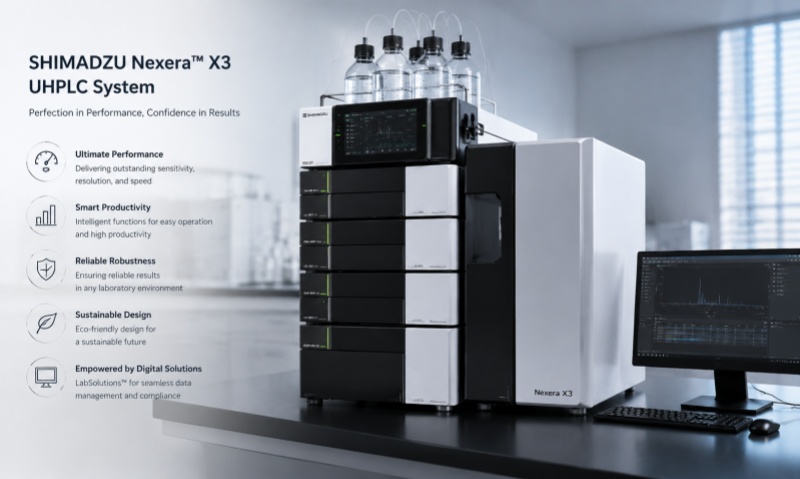
The Shimadzu LC-20A series HPLC system is widely used for routine analytical work, and its online degasser plays an important role in maintaining stable solvent delivery. The degasser continuously removes dissolved gases from the mobile phase, helping prevent bubbles, pump malfunction, baseline noise, and fluctuations in detector response. When the red LED on the degasser remains continuously illuminated, the unit has normally entered an error condition because the specified vacuum pressure has not been achieved or maintained. According to the Shimadzu DGU-20A documentation, a continuously illuminated red LED indicates that the degasser has stopped because the required vacuum condition was not reached.
Before troubleshooting, it is important to understand the normal operating sequence.
After the degasser is powered on, the red LED normally flashes while the vacuum pump reduces pressure inside the vacuum lines. The LED should then change to green as the required vacuum is established. A steady green LED indicates normal vacuum control and readiness for operation. If the required vacuum is not achieved within the specified period, the red LED remains illuminated and the degasser stops because of an error.
Therefore, if the red LED stays on continuously, the first suspicion should be a vacuum-generation or vacuum-maintenance problem, rather than an ordinary communication problem with the LC-20A controller.
The vacuum pump is one of the most important components in the degassing system. After years of operation, the diaphragm, valves, or other internal components can wear. A deteriorated pump may still produce operating noise but may no longer generate sufficient vacuum.
Shimadzu's service documentation recommends directly checking the vacuum pump and pressure-control system. During a normal startup, the LED should progress from red flashing to green operation. If the required green state cannot be reached, the vacuum pump or control system should be investigated.
First restart the degasser and observe the LED sequence. Listen for abnormal pump noise, excessive vibration, intermittent operation, or a pump that runs continuously without reaching stable vacuum.
If tubing leakage and other external causes have been eliminated, the vacuum pump should be performance-tested. A severely worn pump generally requires replacement rather than adjustment.
A vacuum leak is another common cause of a continuously illuminated red LED. Even a relatively small leak can prevent the vacuum pump from reaching the required pressure.
Possible leakage locations include:
Vacuum tubing connections
Aging or cracked tubing
Tubing around the degassing chamber
O-rings and seals
Solenoid-valve connections
Degassing chamber connections
Shimadzu's troubleshooting procedure specifically recommends checking the vacuum tubing and individual degassing chambers when a vacuum error occurs.
Inspect the complete vacuum circuit carefully. Replace tubing that has become hard, cracked, deformed, chemically damaged, or loose.
Do not simply tighten every fitting aggressively. Excessive force can damage plastic fittings or deform sealing surfaces. Connections should be restored according to the applicable Shimadzu service procedure.
Solvent vapor condensation can seriously affect degasser performance. During continuous operation, mobile-phase vapor can enter the vacuum system. Repeated startup and shutdown can also contribute to condensation. Accumulated solvent can contaminate the vacuum pump valve or diaphragm and reduce pumping efficiency.
Shimadzu technical information identifies condensation and deterioration of internal components caused by mobile-phase vapor as important causes of vacuum errors.
If solvent or liquid is found around the vacuum system or exhaust area, do not immediately replace the pump. First investigate whether condensation has occurred.
The service documentation describes cleaning the vacuum pump and then checking whether normal green LED operation can be restored. If cleaning does not recover vacuum performance and liquid contamination has affected the pump valve or diaphragm, pump replacement may be necessary.
The degassing chamber contains the membrane through which dissolved gases are removed from the mobile phase. If the membrane or chamber sealing components deteriorate, air can enter the vacuum side and prevent the system from maintaining sufficient vacuum.
Shimadzu's service manual provides an isolation procedure for identifying a defective degassing chamber. If the vacuum system works normally when a particular chamber is isolated but the error returns when that chamber is connected, the corresponding chamber or sealing components may be defective.
Inspect the degassing chambers for:
Damaged membranes
Aging O-rings
Loose connections
Cracks or deformation
Evidence of solvent contamination
If a specific chamber is confirmed to be leaking, replace the defective chamber or applicable sealing components according to the service manual.
The solenoid valve controls the vacuum path during different operating stages. If the valve becomes contaminated, mechanically stuck, electrically defective, or unable to seal properly, the vacuum system may fail to achieve stable pressure.
Shimadzu's troubleshooting procedure includes a specific solenoid-valve check for DGU-20A units with a red error LED.
A trained service engineer should check whether the solenoid valve switches correctly during startup and vacuum control. If the vacuum pump itself performs normally but the valve does not operate correctly, replacement of the solenoid valve may be required.
The degasser does not simply turn the vacuum pump on and leave it running. The control system continuously monitors vacuum pressure and adjusts pump operation according to feedback from the pressure sensor.
Consequently, a faulty pressure sensor, abnormal sensor signal, or defective control board can also result in a red LED error.
Shimadzu service documentation specifies electrical checks of the pressure-sensing circuit. For example, the DGU-20A3/20A5 service procedure identifies a pressure-output value around 127 mV ±10 mV under the specified test condition. Such measurements require access to internal electronics and should be performed only by qualified service personnel.
The degasser can also be affected by improper solvent handling. When priming or drawing solvent through the system, Shimadzu specifies that the solvent should be drawn slowly; the instruction manual warns that a flow rate above 10 mL/min during the specified syringe operation can overload the degassing membrane and potentially damage the degassing chamber.
Therefore, when troubleshooting a red LED error, check whether the problem appeared immediately after:
Replacing the mobile phase
Priming the HPLC system
Changing solvents
Flushing with a different solvent
Running buffer solutions
Performing maintenance on the flow lines
These events can help identify whether the problem is mechanical, chemical, or related to solvent handling.
For an LC-20A system whose degasser red LED remains continuously illuminated, a practical troubleshooting sequence is:
Step 1: Turn the system off safely and restart the degasser.
Step 2: Observe the LED sequence. Determine whether the red LED remains on immediately or appears after the initial vacuum-building process.
Step 3: Check the vacuum tubing for loose connections, cracks, aging, or solvent damage.
Step 4: Check for solvent condensation or liquid around the vacuum system.
Step 5: Evaluate vacuum-pump noise and operating behavior.
Step 6: Inspect the degassing chamber and sealing components.
Step 7: Check solenoid-valve operation.
Step 8: If all mechanical components appear normal, check the pressure sensor and control board.
Step 9: After repair, restart the unit and confirm that the LED changes from red flashing to green and finally remains steadily green.
This sequence follows the general troubleshooting logic described in Shimadzu's DGU-20A service documentation.
Preventive maintenance is particularly important for older LC-20A systems. The vacuum pump, tubing, filters, pressure sensor and degassing chamber should be periodically inspected. Shimadzu's service documentation includes maintenance recommendations for vacuum tubing, pump performance, filters, pressure sensing and vacuum chambers.
Operators should also avoid leaving unsuitable solvents in the system for extended periods. When changing between solvents with significantly different properties, appropriate flushing procedures should be followed.
A continuously illuminated red LED on a Shimadzu LC-20A/DGU-20A degasser normally indicates that the required vacuum has not been achieved or maintained. The most common areas to investigate are the vacuum pump, vacuum tubing, degassing chamber, O-rings, solenoid valve, solvent condensation, pressure sensor and control board.
The most efficient repair strategy is not to replace the vacuum pump immediately. Instead, technicians should first determine whether the problem is caused by leakage, condensation, chamber damage, valve failure, pump deterioration, or an electrical control problem. Systematic isolation of each component can significantly reduce unnecessary replacement costs and shorten HPLC downtime.