
Consultation Hotline
+1 (302) 618-8777
+1 (302) 618-8777
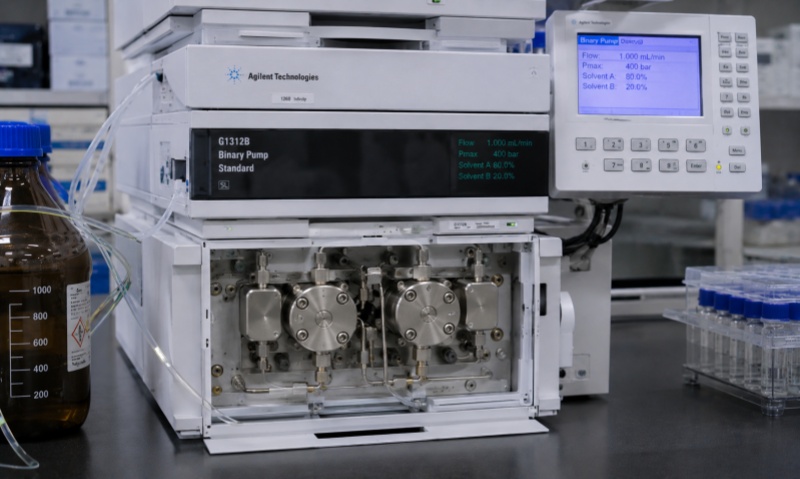
Air bubbles are a common problem in high-performance liquid chromatography (HPLC) systems. Although they may appear small and harmless, trapped air can seriously affect mobile-phase delivery, pump pressure stability, detector response, chromatographic reproducibility, and peak shape. When bubbles enter the pump head, flow cell, or other critical components, the HPLC system may produce unstable pressure, baseline noise, retention-time shifts, or even complete loss of flow.
Understanding how to identify the source of air and how to properly degas the system is therefore an essential part of HPLC operation and maintenance.
Air can enter the HPLC flow path for several reasons. The most common cause is insufficiently degassed mobile phase. Dissolved gases can come out of solution when pressure changes inside the system, particularly during solvent aspiration or when the mobile phase passes through areas of lower pressure.
Air can also enter through loose tubing connections, damaged ferrules, leaking fittings, cracked solvent lines, or an improperly installed inlet filter.
Another common cause is an empty or nearly empty solvent reservoir. When the solvent level becomes too low, the pump may draw air into the inlet line.
Changing mobile phases without properly purging the system can also introduce air. In addition, some organic solvents contain significant amounts of dissolved gas and may require effective degassing before use.
Air bubbles in the pump can cause periodic pressure fluctuations or an unstable pressure trace. The measured flow rate may also become inconsistent.
If bubbles reach the detector flow cell, the baseline may suddenly become noisy or show sharp spikes. In UV detection, bubbles can cause abnormal absorbance signals because the optical path is temporarily disturbed.
Other symptoms include irregular peak areas, retention-time variation, poor peak shapes, difficulty priming the pump, and intermittent loss of flow.
If these problems occur immediately after replacing the mobile phase or performing maintenance, trapped air should be one of the first possible causes to investigate.
Before beginning a degassing procedure, inspect the complete solvent-delivery path.
Check the solvent reservoir, inlet tubing, inlet filter, tubing connections, pump head, purge valve, and other accessible fittings. Look for visible bubbles in the tubing.
Confirm that the solvent reservoir contains enough mobile phase and that the inlet filter is fully submerged.
If air is continuously entering the line, simply purging the system may not solve the problem. The source of the leak must first be identified and corrected.
Many modern HPLC systems are equipped with an online vacuum degasser. The degasser continuously removes dissolved gases from the mobile phase before the solvent reaches the pump.
When bubbles are observed, first confirm that the degasser is powered on and operating normally. Check the solvent lines and make sure the correct solvent channels are connected.
Allow sufficient time for the degasser to remove dissolved gas, particularly after replacing an empty solvent reservoir.
If the degasser is malfunctioning, the instrument may continue to show bubble-related symptoms even though the pump itself is operating correctly. A qualified technician should inspect the degasser if abnormal operation is suspected.
Pump purging is one of the most effective ways to remove air that has already entered the pump head.
Place the appropriate solvent in the reservoir and open the pump purge valve according to the manufacturer's operating procedure. Direct the purge outlet into a suitable waste container.
Set the pump to an appropriate low flow rate and allow solvent to pass through the purge line. Observe the solvent tubing and outlet. Initially, air bubbles may be visible in the waste stream.
Continue purging until a continuous stream of solvent is obtained without visible bubbles.
Afterward, close the purge valve carefully and return the pump to normal operating conditions.
The exact purge procedure varies between HPLC models, so the manufacturer's operating instructions should always take priority.
For systems without an effective online degasser, mobile phases can be degassed before use.
Common techniques include vacuum degassing, ultrasonic treatment, and helium sparging. Vacuum degassing removes dissolved gases by reducing the pressure above the mobile phase.
Ultrasonic degassing can help release dissolved gases, although the effectiveness depends on solvent composition, temperature, container geometry, and treatment time.
Helium sparging can also remove dissolved gases and may be useful for certain applications. However, the selected method should be compatible with the solvent and analytical procedure.
Degassed mobile phases should be protected from unnecessary exposure to air after treatment.
If the pump pressure is stable but the detector baseline remains noisy, the problem may be caused by bubbles in the detector flow cell.
First, ensure that the flow cell is compatible with the mobile phase and that the system is being operated under appropriate pressure and flow conditions.
Increasing system pressure appropriately can sometimes help prevent gas bubbles from forming, but operators should never exceed the rated pressure of the system or column.
If the manufacturer's procedure permits, flushing the detector with a suitable solvent can help remove trapped bubbles.
Never open or mechanically disturb a detector flow cell unless the maintenance procedure specifically requires it.
Prevention is more effective than repeatedly removing bubbles after they appear.
Prepare mobile phases carefully and filter them when required by the analytical method. Keep solvent inlet filters clean and fully immersed.
Inspect tubing and fittings regularly for leaks. Replace damaged tubing, ferrules, seals, and other consumable components when necessary.
After changing solvents, use the appropriate purge procedure before starting an analytical sequence. When using buffered mobile phases, flush the system with a compatible solvent after analysis to prevent salt precipitation and blockage.
Avoid rapid changes in solvent composition that can cause dissolved gases to come out of solution.
If bubbles continue to appear after proper degassing and purging, investigate the pump seals, inlet tubing, check valves, degasser, fittings, and solvent inlet system.
Persistent air ingress may indicate a leak or component failure rather than a simple degassing problem.
If the pump cannot maintain pressure, the pressure fluctuates severely, or the instrument produces repeated error messages, professional servicing may be required.
Air bubbles can significantly reduce HPLC performance and may lead to unstable pressure, poor flow reproducibility, detector noise, and unreliable chromatographic results. Effective treatment should begin by identifying the source of the air rather than simply increasing the purge time.
Using an online degasser, properly purging the pump, pre-degassing mobile phases, and carefully removing bubbles from the detector flow cell can restore stable operation in many cases. Regular inspection of solvent lines, inlet filters, fittings, seals, and degassing equipment can further reduce the risk of recurring problems.
When troubleshooting HPLC bubble problems, always follow the specific operating and maintenance procedures provided by the instrument manufacturer and never exceed the pressure, solvent compatibility, or maintenance limits of the system.